
Bunion Treatment in Sugar Land TX
A bunion doesn’t start as a surgery problem
It starts as a mechanical one.
Most bunions don’t need surgery—especially early on.
They need the right diagnosis, pressure relief, and biomechanical correction to slow progression and control pain.
That’s where conservative care works best.
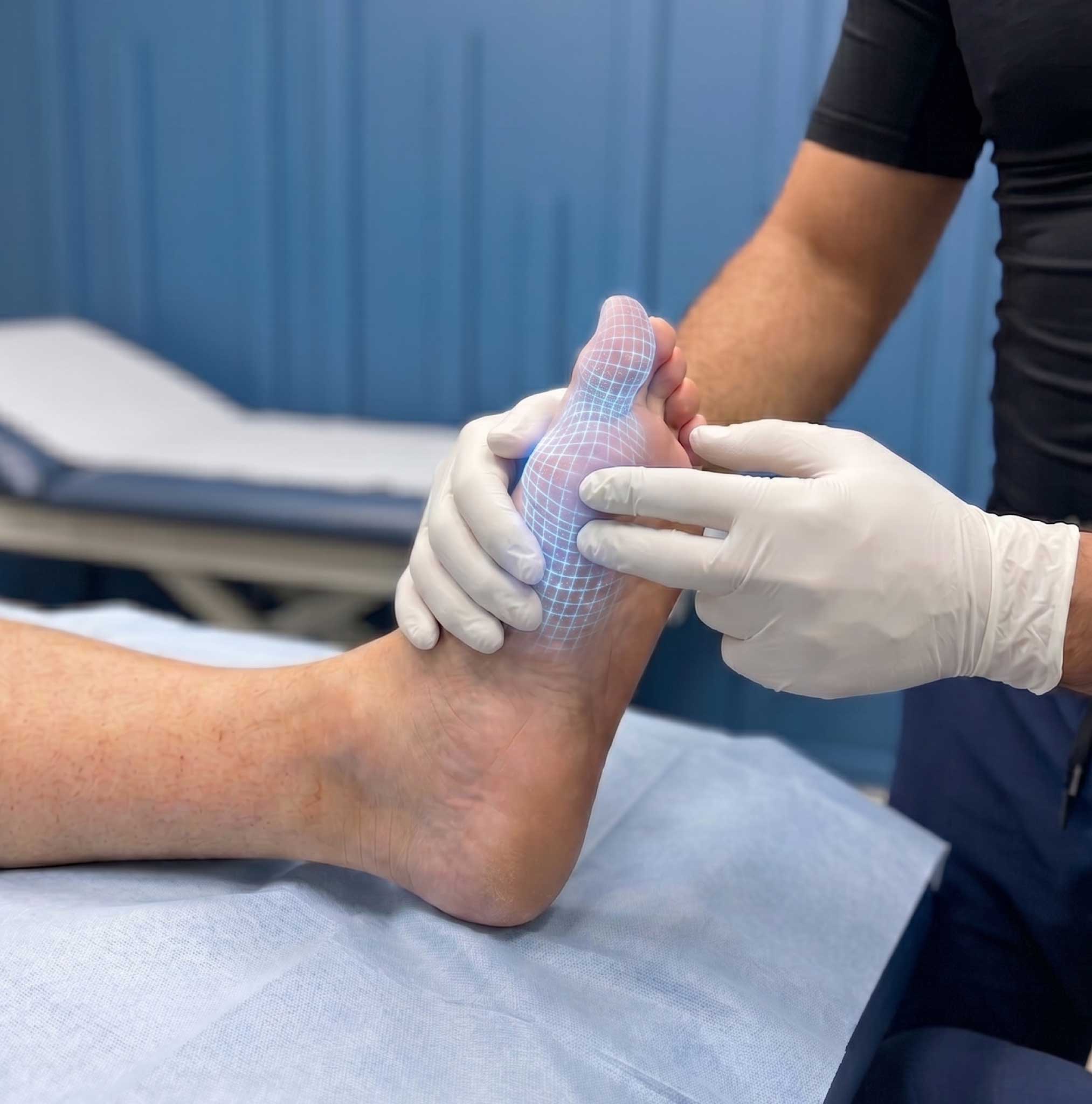
If your big toe is drifting…
If shoes rub and irritate the joint…
If the bump keeps getting bigger year after year…
That’s not “just a bunion you have to live with.”
That’s a progressive foot deformity—and how you manage it now determines what happens later.

Why bunions get worse over time
A bunion isn’t just a bump.
It’s a misalignment of the big toe joint driven by:
- Foot structure
- Abnormal mechanics
- Excess pressure and shear forces
- Time
Pain increases. Shoes become harder to wear.
Secondary problems develop—hammer toes, arthritis, nerve irritation.
The key is intervening before damage becomes irreversible.
Maybe you’ve already tried…
Wider shoes
Helpful, but they don’t correct mechanics.
Padding or sleeves
They reduce friction, not progression.
Anti-inflammatories
Temporary relief. No structural change.
Just putting up with it
The most common and most costly approach long term.
These aren’t bad ideas.
They’re just incomplete.
Our approach: conservative first, always
Surgery has a role—but it is not the first step for most patients.
We focus on slowing progression, reducing pain, and improving function using conservative, evidence-based care.
This may include:
- Custom orthotics to realign forces
- Targeted padding and offloading
- Shoe guidance specific to your foot type
- Physical therapy and joint mobility strategies
- Anti-inflammatory modalities when appropriate
The goal is simple:
keep you active, comfortable, and out of the operating room whenever possible.
What you can expect
Most patients begin treatment at their first visit—here’s how it works:

Confirm
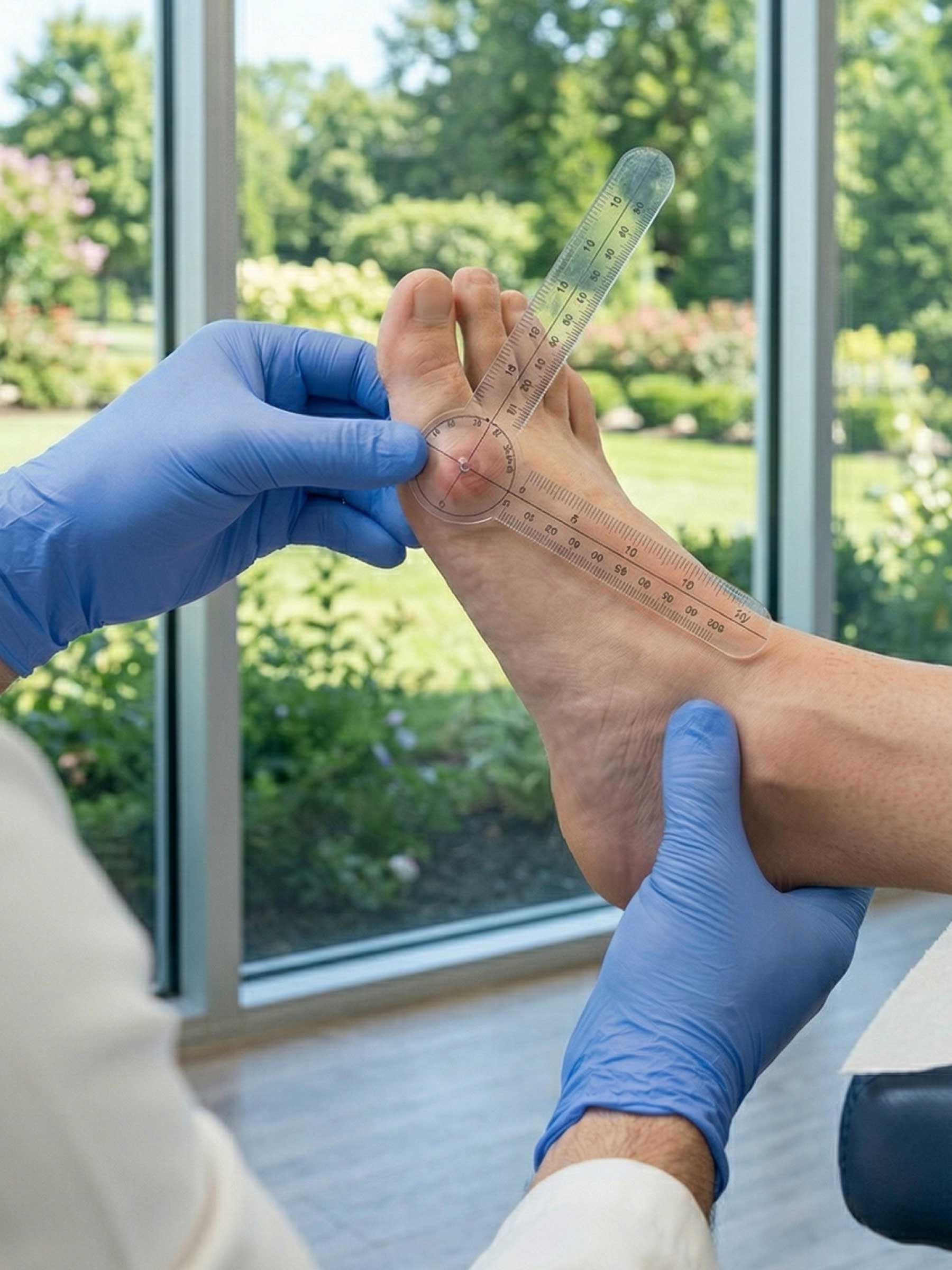
We examine your foot structure, joint alignment, and gait to determine the severity and stability of the bunion.

Control
We design a conservative plan to reduce pressure on the joint and slow progression—customized to your lifestyle and activity level.
Protect
With the right support and monitoring, many patients maintain comfort and function for years without surgery.
Posted on GoogleTrustindex verifies that the original source of the review is Google. I was referred by my PCP and went in for a ingrown toenail and the Staff and Nurses are Very Nice and The Service is Top Tier everything is explained the process was the same visit and not a visit and then come back for the procedure, I Absolutely Love that!!! Dr. Vargas is Very Nice as well!! Quick, felt pressure but no pain because the nurse first sprayed with cold spray and then injected me with the numbing painkiller!! Will return for a follow up!!Posted on GoogleTrustindex verifies that the original source of the review is Google. What a great facility! Dr. Vargas was great, staff included. They put me a room on the time of my appointment. Was not long before seeing doctor. I loved how once looking at my toe he came up with a game plan without even thinking about it. I even got that plan in writing! So happy I chose to go there.Posted on GoogleTrustindex verifies that the original source of the review is Google. Dr. Vargas has been seeing me and treating me for a foot ulcer. He has helped the ulcer to continue to be better. I am confident that he is doing everything possible to help me heal. Also his nurse is helping him through his procedures. They go above and beyond with the patient care.Posted on GoogleTrustindex verifies that the original source of the review is Google. The Medical staff were very professional and attentive to my medical needs.Posted on GoogleTrustindex verifies that the original source of the review is Google. Deborah greeted me with warmth and helped me through the process of the procedure I had done. Dr. Vargas was thorough and explained everything completely.Posted on GoogleTrustindex verifies that the original source of the review is Google. Todo el personal muy amable y el Doctor también. Y al mirar sabe el problema que ocasiona el dolor o molestia.Posted on GoogleTrustindex verifies that the original source of the review is Google. Always a pleasure with Dr.Vargas and his team are great at helping you and always make me feel like at being homePosted on GoogleTrustindex verifies that the original source of the review is Google. I was very pleased with my appointment. The staff is wonderful, Deborah was my nurse and she explained everything very well. Just might be the best medical assistant in Sugarland. The doctor is pretty fast in his explanations but the great thing is he doesn't mind repeating answers. The level of patience is astounding, the facility is very clean, and I look forward to my next visit.
Progress you can feel
Bunions don’t reverse—but symptoms can improve dramatically.
Pain decreases. Shoe tolerance improves.
Activity becomes comfortable again.
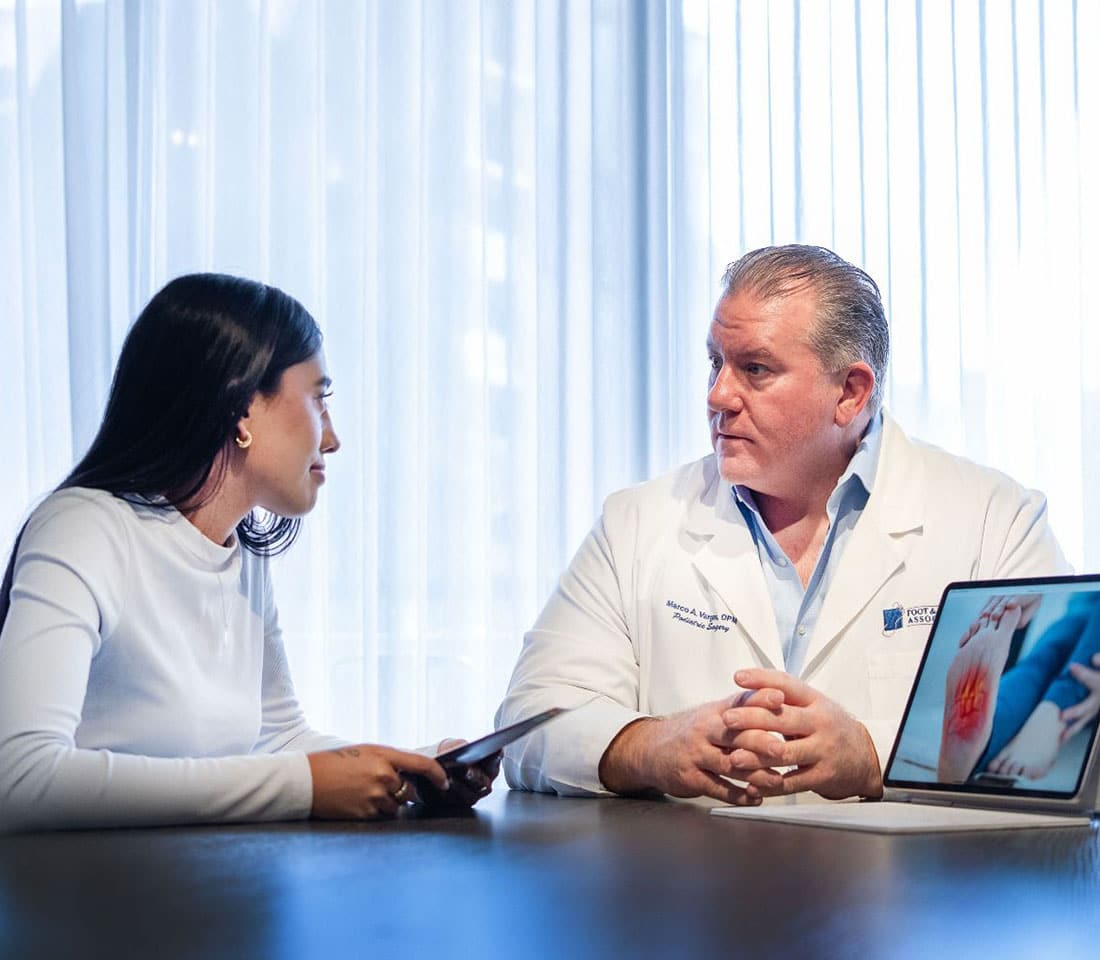
Dr. Marco A. Vargas
“Most bunion patients I see don’t actually need surgery—at least not yet. They need clarity, mechanical correction, and a plan. When conservative care is done correctly and early, we can often delay or completely avoid surgery while keeping patients comfortable and active.”
What patients notice
Less joint pain and irritation
Improved shoe comfort
Reduced inflammation and redness
Slower progression of the deformity
Better long-term joint health
You may still be wondering…
Do all bunions eventually need surgery?
No. Many remain manageable for years with proper care.
Can conservative treatment make the bunion go away?
It won’t reverse the deformity—but it can control symptoms and progression.
When is surgery actually necessary?
When pain persists despite proper conservative care or joint damage becomes severe.
Is it better to operate early?
Not usually. Surgery is best reserved for cases that truly require it.
Are custom orthotics really necessary?
For many patients, yes. They address the mechanics driving the bunion.
Can I stay active with a bunion?
Absolutely—with the right support and management.
Can I start treatment the same day?
In most cases, yes.
Read More
Bunion Treatment in Sugar Land, TX
A bunion is a bony prominence that develops at the base of the big toe. As the joint shifts out of alignment, the big toe may angle toward the smaller toes, creating pressure inside footwear.
Vargas Foot Specialists provides bunion treatment in Sugar Land, TX. Dr. Marco A. Vargas evaluates the deformity’s severity, identifies factors that contribute to discomfort, and develops a treatment plan based on the patient’s symptoms and lifestyle.
Common Symptoms of Bunions
Not every bunion causes pain, but common symptoms may include:
- A visible bump at the base of the big toe
- Redness or swelling around the joint
- Pain while walking or wearing shoes
- Stiffness in the big toe
- Corns or calluses caused by overlapping toes
- Difficulty finding comfortable footwear
- Numbness or irritation around the joint
- Reduced movement of the big toe
Symptoms may gradually worsen as the joint changes or pressure on the area increases.
What Causes Bunions?
Bunions usually develop from a combination of inherited foot structure, biomechanics, and external pressure. Factors that may contribute include:
- A family history of bunions
- Flat feet or unstable arches
- Abnormal walking mechanics
- Tight or narrow footwear
- Repetitive pressure on the forefoot
- Arthritis affecting the big toe joint
- Previous foot injuries
- Certain neuromuscular conditions
Shoes don’t always cause bunions, but poorly fitting footwear can increase pressure and make an existing deformity more painful.
Non-Surgical Bunion Treatment
Conservative treatment cannot remove the bony prominence, but it may reduce pressure, improve support, and help manage symptoms.
Depending on your needs, Dr. Vargas may recommend:
- Wider shoes with additional toe room
- Padding to reduce friction
- Activity modifications
- Stretching or rehabilitation exercises
- Medication for short-term symptom management
- Custom orthotics to improve support and pressure distribution
- MLS Laser Therapy to help manage pain and inflammation when appropriate
Treatment is based on how the bunion affects your comfort and mobility, not solely on its appearance.
When Is Bunion Surgery Considered?
Surgery may be considered when bunion pain interferes with daily activities and appropriate conservative treatments no longer provide sufficient relief. The goal is to correct the underlying alignment problem, reduce pain, and improve function.
Several procedures are available, and the right approach depends on the deformity’s severity, joint condition, and individual health needs. Learn more about foot and ankle surgery and the evaluation process.
Preventing Bunion Symptoms From Worsening
Early care may help reduce irritation and pressure around the joint. Choose shoes with a wide toe box, avoid footwear that compresses your toes, and seek an evaluation when symptoms start affecting movement or your footwear choices.
Serving Sugar Land and Nearby Communities
Vargas Foot Specialists treats bunions for patients in Sugar Land, Missouri City, Stafford, Richmond, Rosenberg, Southwest Houston, and communities throughout Fort Bend County.
If a bunion is causing pain or limiting your activities, schedule an appointment at our Sugar Land office for an evaluation and personalized treatment plan.
A bunion doesn’t demand surgery.
It demands attention.
The earlier you address it, the more control you keep over your options.
Call (281) 313-0090 for a same-day appointment.