
 Skip to content
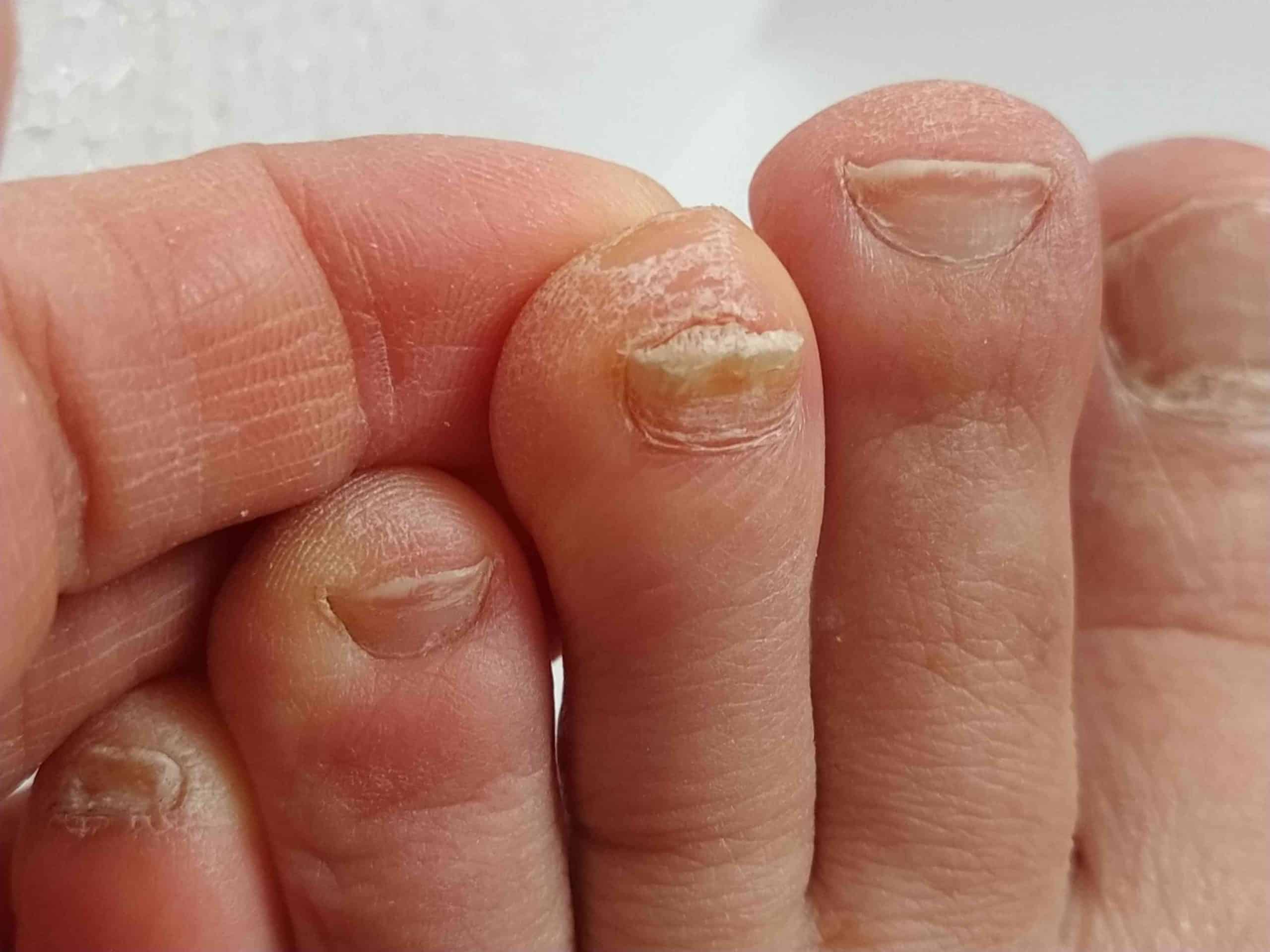
Have you noticed that your toenails are becoming yellow, thick, brittle, or discolored? If the problem continues despite trying over-the-counter products, you may be dealing with a fungal nail infection.
Toenail fungus, medically known as onychomycosis, is a common condition that can affect the appearance and health of your nails. Because the infection can develop underneath the nail plate, treating it may require more than regular nail care.
At Vargas Foot Specialists, we help patients understand the possible causes of nail changes and explore appropriate treatment options, including Lunula® Laser Therapy when suitable.
Toenail fungus develops when fungi infect the nail or the tissue underneath it. Warm, moist environments can encourage fungal growth, which is why infections may develop after exposure to contaminated surfaces or when feet remain damp inside shoes.
Common risk factors include:
Wearing sweaty shoes and socks for extended periods.
Walking barefoot in shared showers or locker rooms.
Having athlete’s foot.
Experiencing nail injuries.
Having diabetes or circulation problems.
Having a previous fungal nail infection.
Toenail fungus can affect one or several nails. Without appropriate treatment, the affected nail may become increasingly thick, brittle, discolored, or difficult to trim.
Common symptoms include yellow, white, or brown discoloration, thickened nails, brittle edges, crumbling nail material, and changes in nail shape.
Some people also experience discomfort when wearing shoes because the affected nail becomes thicker or presses against the surrounding toe.
However, not every discolored or thick toenail is caused by fungus. Nail trauma, psoriasis, and other conditions can produce similar changes. A podiatrist can evaluate your nails and determine whether additional testing is necessary before recommending treatment.
Toenail fungus can be difficult to treat because the infection may be located beneath the nail plate, where some products applied to the skin cannot reach it effectively.
Toenails also grow slowly. Even when treatment successfully addresses the infection, it can take several months for healthy nail growth to replace the damaged portion.
Another challenge is reinfection. Moist footwear, shared surfaces, and untreated athlete’s foot may contribute to recurring problems.
For these reasons, the best approach is to confirm the diagnosis, select an appropriate treatment, and follow recommendations for nail and foot hygiene.
Treatment depends on the severity of the infection, the number of nails involved, your medical history, and your preferences.
Depending on the diagnosis, a podiatrist may recommend topical or oral antifungal medication. Oral medications can be effective for certain fungal nail infections, but they may have side effects and require consideration of other medications and health conditions.
A podiatrist may trim or reduce the thickness of an affected nail to improve comfort and support other treatments. Professional nail care alone may not eliminate the infection, so it is important to follow an appropriate treatment plan.
Lunula® Laser Therapy is a non-invasive treatment option offered for fungal toenails. It uses low-level laser light and may be considered for patients seeking an alternative or an addition to other treatment approaches.
Results vary, and laser treatment does not guarantee complete elimination of the fungus. Your podiatrist can discuss whether this option is appropriate for your condition and explain realistic expectations.
Keeping your feet clean and dry is an important part of managing fungal nail infections. Change damp socks, allow shoes to dry between uses, wear footwear in shared showers, and seek treatment for athlete’s foot when present.
These habits may help reduce the risk of another infection, although recurrence is still possible.
Consider scheduling an evaluation if your toenails remain discolored, become increasingly thick, cause discomfort, or do not improve with appropriate care.
If you have diabetes, reduced circulation, or a weakened immune system, it is particularly important to seek professional advice before attempting to treat a problematic nail yourself.
At Vargas Foot Specialists, Dr. Marco A. Vargas, DPM, FACFAS, DABFAS, evaluates foot and nail conditions and helps patients explore treatment options suited to their needs.
If you are searching for toenail fungus treatment in Sugar Land, a nail fungus doctor near you, or a podiatrist in Houston, our office is located at 4655 Sweetwater Blvd, Suite 650, Sugar Land, TX 77479.
Call (281) 313-0090 to schedule an appointment and learn more about your options, including Lunula® Laser Therapy.
Vargas Foot Specialists welcomes patients from Sugar Land and surrounding communities, including Missouri City, Stafford, Richmond, Rosenberg, Katy, and Houston. We serve patients throughout the surrounding area, including Fort Bend County and nearby communities in Harris and Brazoria counties.
En Vargas Foot Specialists, nos enorgullece atender a nuestra comunidad tanto en inglés como en español. El Dr. Marco A. Vargas es bilingüe y nuestro equipo tiene una conexión con la comunidad latina. Queremos que cada paciente pueda explicar sus síntomas, comprender su diagnóstico y conocer sus opciones de tratamiento en el idioma con el que se sienta más cómodo.
Si tienes las uñas amarillas, gruesas o con cambios de color, podemos ayudarte a evaluar las posibles causas y determinar qué tratamiento podría ser adecuado para ti.
Estamos ubicados en Sugar Land, Texas, y atendemos pacientes de Houston y ciudades cercanas. Llámanos al (281) 313-0090 para programar una cita.

0 Comments