
 Skip to content
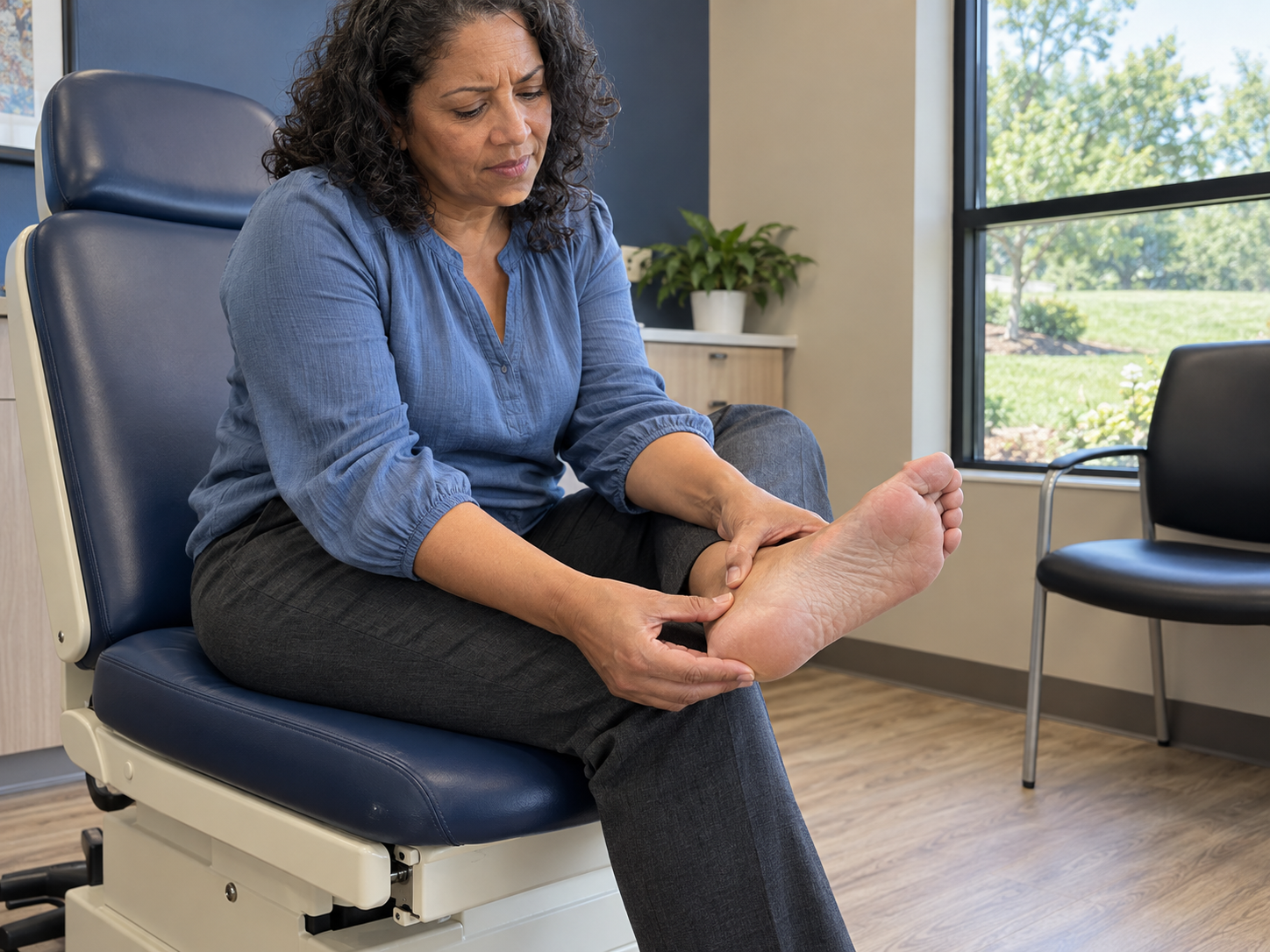
Pain on the bottom of your foot can make walking, exercising, and standing throughout the day uncomfortable. You might feel a sharp sensation near your heel, soreness in your arch, or pressure beneath the ball of your foot.
Because different conditions can cause similar symptoms, identifying the location and pattern of your pain is an important first step toward finding the right treatment.
If you are experiencing persistent bottom-of-foot pain, a podiatrist can evaluate your symptoms and help determine which treatment options may be appropriate.
Plantar fasciitis is a common cause of pain beneath the heel and along the arch. It involves irritation of the plantar fascia, a thick band of tissue that helps support the bottom of your foot.
A typical symptom is sharp heel pain during the first steps in the morning or after sitting for an extended period. The discomfort may improve as you move around but return after prolonged standing, walking, or exercise.
Treatment may include activity modification, stretching, supportive footwear, custom orthotics when appropriate, and other treatments based on the severity of your symptoms.
For persistent cases, a podiatrist may also discuss options such as EPAT® Shockwave Therapy or MLS® Laser Therapy when clinically appropriate.
Metatarsalgia refers to pain and inflammation around the ball of the foot, just behind your toes. Patients often describe the sensation as aching, burning, or feeling as though they are stepping on a small stone.
Possible contributing factors include repetitive impact, prolonged standing, certain foot structures, and shoes that place excessive pressure on the forefoot.
Treatment may involve changing footwear, modifying activities, and using appropriate cushioning or custom orthotics to redistribute pressure.
If you regularly experience pain beneath the ball of your foot, a podiatrist can help identify the underlying cause rather than simply treating the discomfort.
Your arches help distribute pressure and absorb forces during movement. When the arches are low or the mechanics of your feet place additional stress on certain structures, you may experience soreness along the bottom of your feet.
Some people with flat feet have no symptoms. Others may experience arch fatigue, discomfort after standing for long periods, or pain during physical activity.
Supportive shoes and custom orthotics may help selected patients manage symptoms by improving support and pressure distribution. The best approach depends on your foot structure and the cause of your discomfort.
Morton’s neuroma affects tissue surrounding a nerve, commonly between the third and fourth toes. Although the problem involves a nerve rather than the sole itself, it can cause pain that feels as though it is coming from the ball of the foot.
Symptoms may include burning, tingling, numbness, or the sensation of having a pebble inside your shoe.
Tight footwear and repeated pressure on the forefoot may aggravate symptoms. Treatment options can include footwear changes, padding, orthotics, and other interventions depending on the severity of the condition.
Increasing your walking or running distance too quickly can place more stress on the bones and soft tissues of your feet than they can comfortably tolerate.
Overuse may cause soreness, while a stress fracture can produce more localized pain that worsens with weight-bearing activity. Swelling or tenderness in one specific area may also occur.
Do not assume persistent pain is simply a result of exercise. A podiatrist may recommend imaging or other evaluation to determine whether a bone injury or another condition is present.
The most appropriate treatment depends on the cause of your symptoms. While you arrange an evaluation, consider reducing activities that aggravate the pain and wearing supportive shoes instead of walking barefoot on hard surfaces.
Avoid continuing high-impact exercise if it significantly increases your discomfort. Persistent or worsening pain deserves professional attention, particularly when it changes the way you walk.
A podiatrist may recommend treatments such as:
Supportive footwear and activity modification.
Stretching or rehabilitation exercises when appropriate.
Custom orthotics to address specific mechanical problems.
Additional evaluation or imaging when needed.
EPAT® Shockwave Therapy or MLS® Laser Therapy for selected conditions.
These treatments are not interchangeable. For example, a treatment that may help some patients with plantar fasciitis will not necessarily address a stress fracture or nerve problem. An accurate diagnosis is essential.
Schedule an evaluation if your foot pain persists, repeatedly returns, limits your daily activities, or becomes progressively worse.
Seek prompt medical attention if you cannot bear weight, have severe pain after an injury, or notice significant swelling or redness. People with diabetes or circulation problems should also seek advice early when new foot pain develops.
At Vargas Foot Specialists, Dr. Marco A. Vargas, DPM, FACFAS, DABFAS, evaluates a wide range of foot and ankle conditions and helps patients understand their treatment options.
If you are looking for a podiatrist in Sugar Land, a foot doctor near you, or foot pain treatment in Houston, our team can help you take the next step toward understanding your symptoms.
Visit us at 4655 Sweetwater Blvd, Suite 650, Sugar Land, TX 77479, or call (281) 313-0090 to schedule an appointment.
We welcome patients from Sugar Land, Houston, Missouri City, Stafford, Richmond, Rosenberg, and Katy, serving the surrounding communities of Fort Bend County and nearby areas of Harris and Brazoria counties.
En Vargas Foot Specialists, ofrecemos atención en inglés y español para que nuestros pacientes puedan comunicarse con confianza. El Dr. Marco A. Vargas es bilingüe y nuestro equipo tiene una conexión con la comunidad latina.
Si sientes dolor en la planta del pie, el talón o el arco, es importante identificar la causa antes de elegir un tratamiento. Algunas molestias pueden estar relacionadas con la fascitis plantar, la presión sobre el antepié, los nervios o una lesión por sobrecarga.
Atendemos pacientes en Sugar Land y las comunidades cercanas a Houston. Si el dolor está afectando tu manera de caminar o tus actividades diarias, llama al (281) 313-0090 para programar una evaluación.

0 Comments