
BUNION TREATMENT IN SUGAR LAND, TX

A bunion doesn’t start as a surgery problem.

It starts as a mechanical one.

Most bunions don’t need surgery—especially early on.
They need the right diagnosis, pressure relief, and biomechanical correction to slow progression and control pain.
That’s where conservative care works best.

If your big toe is drifting…

If shoes rub and irritate the joint…
If the bump keeps getting bigger year after year…

That’s not “just a bunion you have to live with.”

That’s a progressive foot deformity—and how you manage it now determines what happens later.

Why bunions get worse over time

A bunion isn’t just a bump.

It’s a misalignment of the big toe joint driven by:

Foot structure

Abnormal mechanics

Excess pressure and shear forces

Time

Ignore it, and the joint continues to drift.
Pain increases. Shoes become harder to wear.
Secondary problems develop—hammer toes, arthritis, nerve irritation.
The key is intervening before damage becomes irreversible.

Maybe you’ve already tried…

Wider shoes

Helpful, but they don’t correct mechanics.

Padding or sleeves

They reduce friction, not progression.

Anti-inflammatories

Temporary relief. No structural change.

Just putting up with it

The most common—and most costly—approach long term.
These aren’t bad ideas.
They’re just incomplete.

Our approach: conservative first, always

Surgery has a role—but it is not the first step for most patients.

We focus on slowing progression, reducing pain, and improving function using conservative, evidence-based care.

This may include:

Custom orthotics to realign forces

Targeted padding and offloading

Shoe guidance specific to your foot type

Physical therapy and joint mobility strategies

Anti-inflammatory modalities when appropriate

The goal is simple:
keep you active, comfortable, and out of the operating room whenever possible.

What you can expect.

Most patients begin treatment at their first visit—here’s how it works:

Confirm

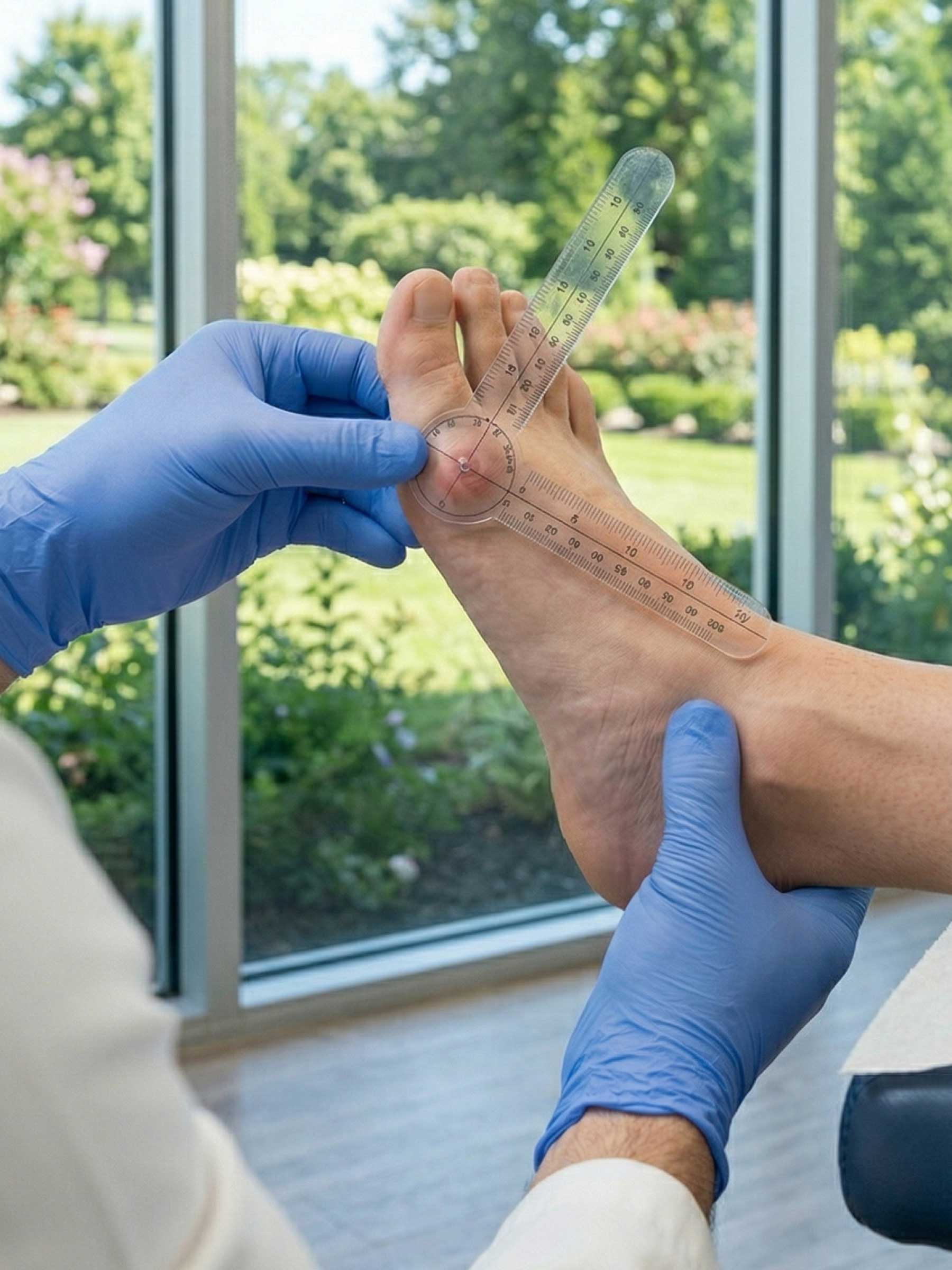
We examine your foot structure, joint alignment, and gait to determine the severity and stability of the bunion.

Control

We design a conservative plan to reduce pressure on the joint and slow progression—customized to your lifestyle and activity level.
Protect

With the right support and monitoring, many patients maintain comfort and function for years without surgery.
Progress you can feel

Bunions don’t reverse—but symptoms can improve dramatically.
Pain decreases. Shoe tolerance improves.
Activity becomes comfortable again.

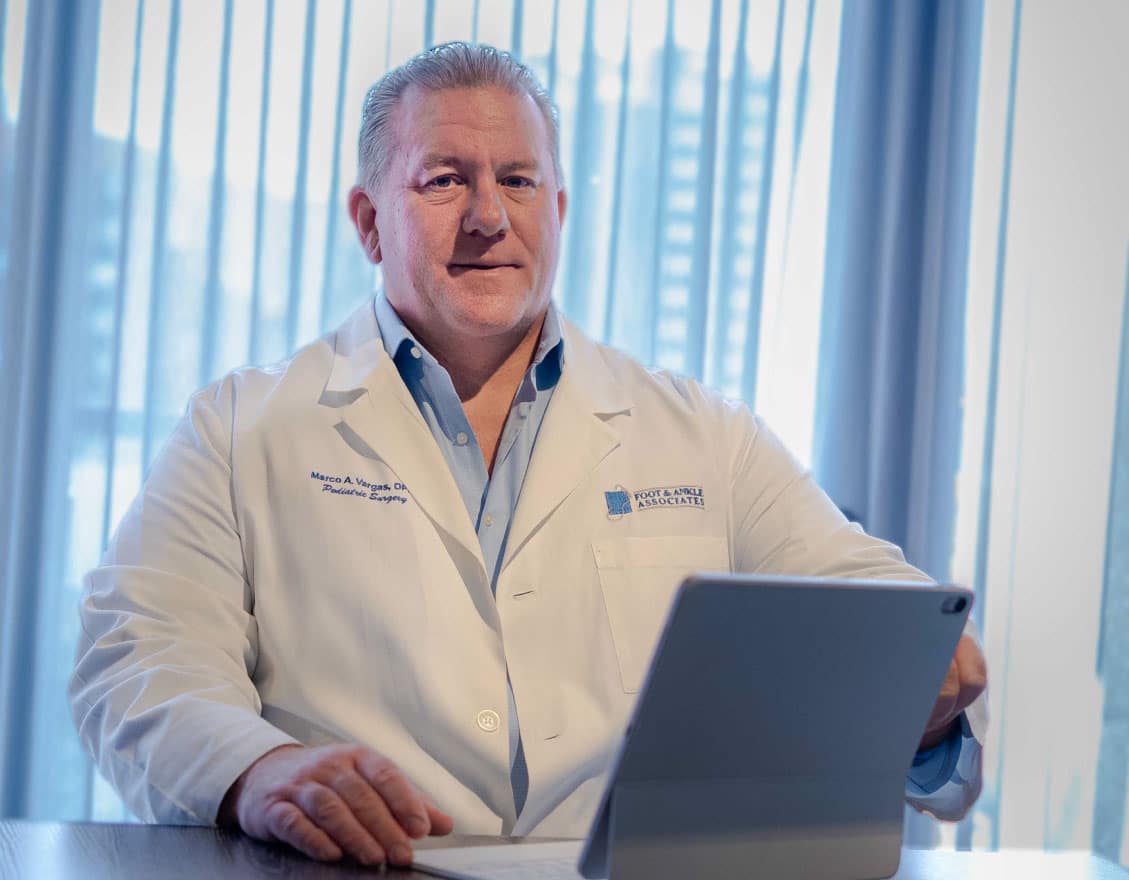
“Most bunion patients I see don’t actually need surgery—at least not yet. They need clarity, mechanical correction, and a plan. When conservative care is done correctly and early, we can often delay or completely avoid surgery while keeping patients comfortable and active.”

Dr. Marco Vargas

What patients notice

Less joint pain and irritation

Improved shoe comfort

Reduced inflammation and redness

Slower progression of the deformity

Better long-term joint health

You may still be wondering…

Do all bunions eventually need surgery?

No. Many remain manageable for years with proper care.

Can conservative treatment make the bunion go away?

It won’t reverse the deformity—but it can control symptoms and progression.

When is surgery actually necessary?

When pain persists despite proper conservative care or joint damage becomes severe.

Is it better to operate early?

Not usually. Surgery is best reserved for cases that truly require it.

Are custom orthotics really necessary?

For many patients, yes. They address the mechanics driving the bunion.

Can I stay active with a bunion?

Absolutely—with the right support and management.

Can I start treatment the same day?

In most cases, yes.

A bunion doesn’t demand surgery.

It demands attention.

The earlier you address it, the more control you keep over your options.

📞 Call (281) 313-0090 for a same-day appointment