
Ingrown Toenail Treatment in Sugar Land TX
Toe pain that won’t settle down?
Let’s fix it properly—before it gets worse.
An ingrown toenail may start as a nuisance, but it doesn’t stay that way.
Left untreated, it can quickly progress to infection, drainage, and severe pain—especially in people with diabetes or circulation issues.
The good news?
When treated early and correctly, relief is fast and predictable.

If yor toe is tender…
If the skin is red or swollen…
If it hurts to wear shoes or walk…
That’s not “just a bad nail.”
That’s an ingrown toenail, and it usually won’t resolve on its own.

Why ingrown toenails keep coming back
An ingrown toenail occurs when the edge of the nail curves or presses into the surrounding skin. This creates inflammation—and often infection.
Common causes include:
- Improper nail trimming
- Tight shoes or pressure
- Nail shape or genetics
- Trauma to the toe
Once the nail breaks the skin, bacteria move in.
Pain escalates. Swelling worsens. Drainage may appear.
At that point, home care stops working.
Maybe you’ve already tried…
Soaking the toe
Temporary relief—but no correction.
Cutting the nail yourself
Often makes the problem worse.
Antibiotic ointments
They don’t remove the offending nail edge.
Just avoiding pressure
Hard to do—and rarely enough.
If this sounds familiar, you’re not alone.
Most ingrown toenails persist until the nail edge is properly treated.

Our approach: simple, effective, and conservative
Most ingrown toenails can be treated quickly and comfortably in the office—without surgery or long recovery.
Treatment is based on:
- Severity of pain and infection
- Whether this is a first-time or recurring issue
- Your overall health (especially diabetes or circulation concerns)
Early care usually means faster relief and fewer procedures.
What you can expect
Most patients begin treatment at their first visit—here’s how it works:

Confirm
We examine the nail, surrounding skin, and signs of infection. This determines the least invasive solution.

Relieve
In many cases, relief is immediate once the offending nail edge is addressed. The procedure is brief and well tolerated.

Prevent
We guide you on nail care, footwear, and—if needed—long-term solutions to prevent recurrence.
Posted on GoogleTrustindex verifies that the original source of the review is Google. I was referred by my PCP and went in for a ingrown toenail and the Staff and Nurses are Very Nice and The Service is Top Tier everything is explained the process was the same visit and not a visit and then come back for the procedure, I Absolutely Love that!!! Dr. Vargas is Very Nice as well!! Quick, felt pressure but no pain because the nurse first sprayed with cold spray and then injected me with the numbing painkiller!! Will return for a follow up!!Posted on GoogleTrustindex verifies that the original source of the review is Google. What a great facility! Dr. Vargas was great, staff included. They put me a room on the time of my appointment. Was not long before seeing doctor. I loved how once looking at my toe he came up with a game plan without even thinking about it. I even got that plan in writing! So happy I chose to go there.Posted on GoogleTrustindex verifies that the original source of the review is Google. Dr. Vargas has been seeing me and treating me for a foot ulcer. He has helped the ulcer to continue to be better. I am confident that he is doing everything possible to help me heal. Also his nurse is helping him through his procedures. They go above and beyond with the patient care.Posted on GoogleTrustindex verifies that the original source of the review is Google. The Medical staff were very professional and attentive to my medical needs.Posted on GoogleTrustindex verifies that the original source of the review is Google. Deborah greeted me with warmth and helped me through the process of the procedure I had done. Dr. Vargas was thorough and explained everything completely.Posted on GoogleTrustindex verifies that the original source of the review is Google. Todo el personal muy amable y el Doctor también. Y al mirar sabe el problema que ocasiona el dolor o molestia.Posted on GoogleTrustindex verifies that the original source of the review is Google. Always a pleasure with Dr.Vargas and his team are great at helping you and always make me feel like at being homePosted on GoogleTrustindex verifies that the original source of the review is Google. I was very pleased with my appointment. The staff is wonderful, Deborah was my nurse and she explained everything very well. Just might be the best medical assistant in Sugarland. The doctor is pretty fast in his explanations but the great thing is he doesn't mind repeating answers. The level of patience is astounding, the facility is very clean, and I look forward to my next visit.
Relief you can feel right away
Most patients walk out more comfortable than when they came in.
Healing continues over the following days as inflammation settles.
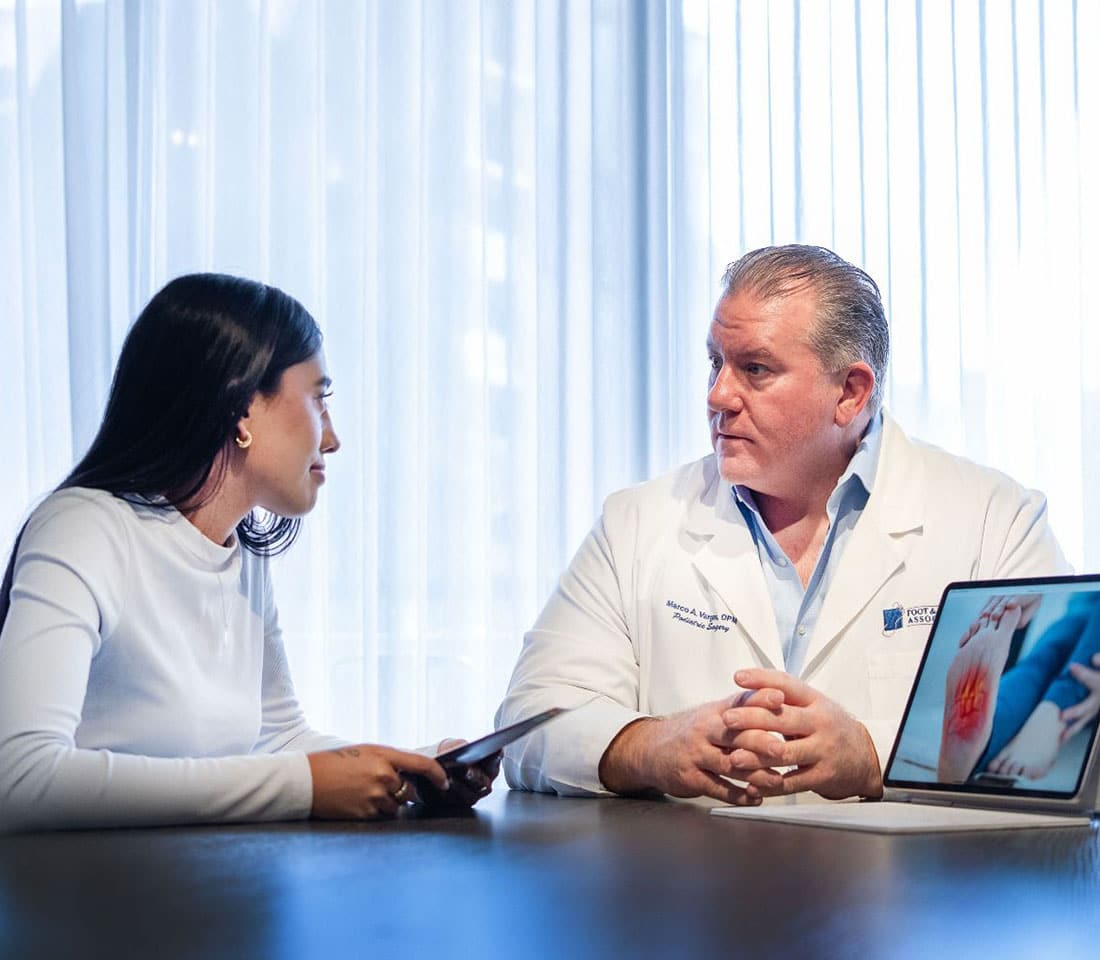
Dr. Marco A. Vargas
“Ingrown toenails seem small—until they’re not. I see patients wait too long, especially when infection starts. Treated early, this is one of the most straightforward problems we handle. Treated late, it becomes much more complicated. We focus on fixing the problem cleanly and preventing it from coming back.”
What patients notice
Rapid pain relief
Reduced swelling and redness
Resolution of drainage or infection
Ability to wear shoes comfortably again
Lower risk of recurrence
You may still be wondering…
Can an ingrown toenail heal on its own?
Rarely—especially once pain or infection starts.
Does treatment hurt?
Most procedures are quick and very tolerable. Numbing is used when needed.
Will I need antibiotics?
Sometimes—but correcting the nail is the key step.
What if this keeps happening?
There are effective long-term solutions for recurring ingrown toenails.
Is this safe for people with diabetes?
Yes—and prompt treatment is especially important.
Can I start treatment the same day?
In most cases, yes.
Is this covered by insurance?
Often. We’ll review coverage before treatment.
Read More
Ingrown Toenail Treatment in Sugar Land, TX
An ingrown toenail develops when the edge of the nail grows into the surrounding skin. This can cause pain, redness, and swelling, making it uncomfortable to wear shoes or walk normally. Without proper care, the area may become infected.
Vargas Foot Specialists provides ingrown toenail treatment in Sugar Land, TX. Dr. Marco A. Vargas evaluates the affected toe and recommends treatment based on the condition’s severity and whether it has recurred or become infected.
Common Signs of an Ingrown Toenail
An ingrown toenail commonly affects the big toe and may cause:
- Pain or tenderness along the nail edge
- Red or swollen skin around the nail
- Sensitivity when wearing closed shoes
- Skin growing over part of the nail
- Drainage or pus
- Bleeding around the nail
- Repeated inflammation in the same area
Seek professional care promptly if the pain becomes severe or if you notice spreading redness, warmth, drainage, or other signs of infection.
What Causes Ingrown Toenails?
Ingrown toenails can develop for several reasons, including:
- Cutting the nails too short
- Rounding the corners of the toenails
- Wearing tight or narrow shoes
- Repeated pressure or injury to the toe
- Naturally curved or thick toenails
- Improper nail trimming
- Excessive foot perspiration
- Inherited nail shape
Changes caused by toenail fungus can also make a nail thicker or more difficult to trim, potentially increasing pressure around the nail edges.
Treatment for Ingrown Toenails
Mild cases may improve with footwear changes and professional nail care. Patients should avoid cutting deeply into the nail corners or attempting to remove the embedded portion at home, as this may worsen the injury or introduce infection.
For painful or recurring ingrown toenails, Dr. Vargas may numb the toe and remove the affected nail section. In some cases, the corresponding area of the nail root may also be treated to help prevent that edge from growing back.
The recommended approach depends on the condition of the nail, surrounding skin, and the patient’s underlying health.
Additional Care for High-Risk Patients
Patients with diabetes, neuropathy, or circulation problems should not attempt to treat an ingrown toenail themselves. Even a small break in the skin may become difficult to heal or develop into a more serious problem.
Vargas Foot Specialists provides diabetic foot care and SmartABI circulation testing when additional monitoring or evaluation is appropriate.
Preventing Ingrown Toenails
To reduce the likelihood of recurrence:
- Trim toenails straight across
- Avoid cutting the nails excessively short
- Wear shoes with sufficient toe room
- Keep the feet clean and dry
- Protect the toes during sports and physical work
- Seek professional nail care when trimming is difficult
Serving Sugar Land and Nearby Communities
Vargas Foot Specialists treats ingrown toenails for patients from Sugar Land, Missouri City, Stafford, Richmond, Rosenberg, Southwest Houston, and communities throughout Fort Bend County.
If an ingrown toenail is painful, infected, or keeps returning, schedule an appointment at our Sugar Land office for professional treatment.
Ingrown toenails don’t improve by waiting.
They become more painful, more infected, and harder to treat.
Let’s take care of it properly—and keep it from coming back.
Call (281) 313-0090 for a same-day appointment.