
 Skip to content
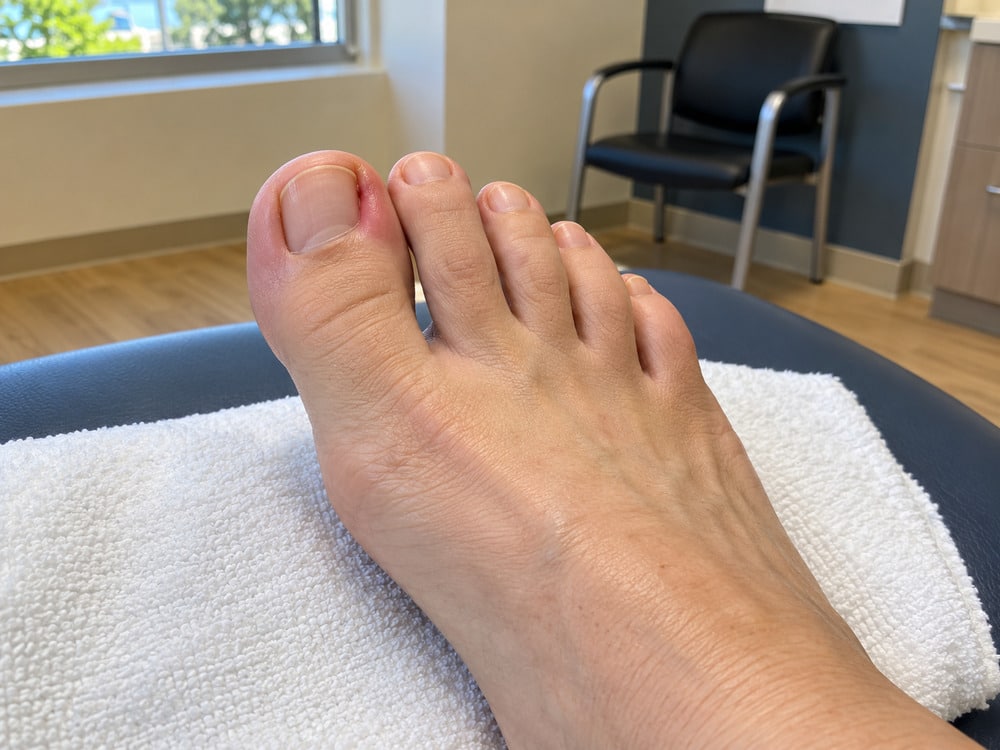
An ingrown toenail may seem like a minor problem at first, but it can quickly become painful and interfere with everyday activities. If you’ve noticed redness, swelling, tenderness, or discomfort around your toenail, you may be dealing with an ingrown nail.
While some mild cases improve with appropriate care, others require professional treatment to prevent worsening symptoms or recurring problems.
At Vargas Foot Specialists in Sugar Land, TX, Dr. Marco A. Vargas helps patients identify the causes of painful toenail conditions and explore treatment options for lasting comfort and healthier feet.
An ingrown toenail, medically known as onychocryptosis, occurs when the edge or corner of a toenail grows into or presses against the surrounding skin.
This condition most commonly affects the big toe, although it can develop on other toes as well.
As the nail irritates the surrounding tissue, it may cause inflammation, tenderness, and swelling. In some cases, bacteria can enter the irritated skin and lead to an infection.
Ingrown toenails can affect people of all ages, including children, teenagers, athletes, and adults.
Recognizing symptoms early may help prevent additional discomfort.
One of the earliest signs is tenderness along the nail border, especially when wearing closed-toe shoes or applying pressure to the affected area.
The skin surrounding the nail may become red, irritated, or swollen as the nail presses against it.
As inflammation increases, even simple activities such as walking, exercising, or standing may become uncomfortable.
Pus, increasing warmth, spreading redness, or drainage may indicate an infection that requires medical attention.
If the same toenail repeatedly becomes painful or ingrown, the nail’s shape or growth pattern may be contributing to the problem.
Several factors can increase your risk of developing an ingrown toenail, including:
Cutting toenails too short or rounding the corners.
Wearing tight shoes that compress the toes.
Repeated pressure from running or sports.
Injuries to the toenail.
Naturally curved or thick toenails.
Excessive sweating or moisture around the feet.
Although improper trimming is a common contributing factor, some people develop ingrown toenails because of their natural nail structure.
Mild ingrown toenails without signs of infection may sometimes improve with conservative care.
Wearing shoes with a wider toe box, keeping the area clean, and avoiding pressure on the affected toe may help reduce irritation.
However, attempting to dig out the nail, cut deeply into its corners, or remove the affected portion yourself can cause additional injury.
If you have diabetes, poor circulation, neuropathy, or a weakened immune system, avoid attempting home procedures and seek professional evaluation.
If your ingrown toenail is painful, infected, or keeps returning, a podiatrist can determine the most appropriate treatment.
Depending on the severity of the condition, treatment options may include:
Conservative nail care: For selected mild cases, professional guidance and adjustments to footwear or nail care habits may be sufficient.
Partial nail removal: When the nail edge is embedded in the skin, a podiatrist may recommend removing the affected portion of the nail to relieve pressure.
Treatment for recurring ingrown nails: In certain cases, a procedure may be recommended to reduce the likelihood that the problematic nail edge will grow back.
Infection management: If an infection is present, your podiatrist will evaluate whether additional treatment is necessary.
The goal is to relieve discomfort, address the underlying problem, and help prevent future complications.
Schedule an appointment if you experience persistent pain, increasing swelling, drainage, or repeated ingrown toenails.
Seek prompt medical attention if redness spreads, you develop fever, or you have a medical condition that increases your risk of foot complications.
Ignoring an infected ingrown toenail may allow the condition to worsen, particularly in patients with diabetes or circulation problems.
If you are searching for ingrown toenail treatment in Sugar Land, a podiatrist near me, or a foot doctor in Houston, Vargas Foot Specialists is here to help.
Dr. Marco A. Vargas, DPM, FACFAS, DABFAS, is a double board-certified podiatric surgeon who evaluates and treats a variety of foot and ankle conditions.
Our office welcomes patients from Sugar Land, Houston, Katy, Richmond, Missouri City, Stafford, Rosenberg, and surrounding communities throughout Fort Bend County, Harris County, and nearby Brazoria County.
Vargas Foot Specialists
4655 Sweetwater Blvd, Suite 650
Sugar Land, TX 77479
Call (281) 313-0090 to schedule your appointment.
¿Tienes una uña encarnada que te causa dolor, inflamación o molestias al caminar?
En Vargas Foot Specialists, contamos con un equipo latino y ofrecemos atención en inglés y español. El Dr. Marco A. Vargas es bilingüe y tiene raíces familiares colombianas, lo que fortalece su conexión con nuestra comunidad hispana.
Atendemos pacientes de Sugar Land, Houston, Katy, Richmond, Missouri City, Stafford, Rosenberg y comunidades cercanas.
Si tienes una uña encarnada que no mejora o presenta señales de infección, es importante recibir una evaluación profesional.
Llámanos al (281) 313-0090 y agenda tu cita. ¡Estamos aquí para ayudarte en tu idioma!

0 Comments