
 Skip to content
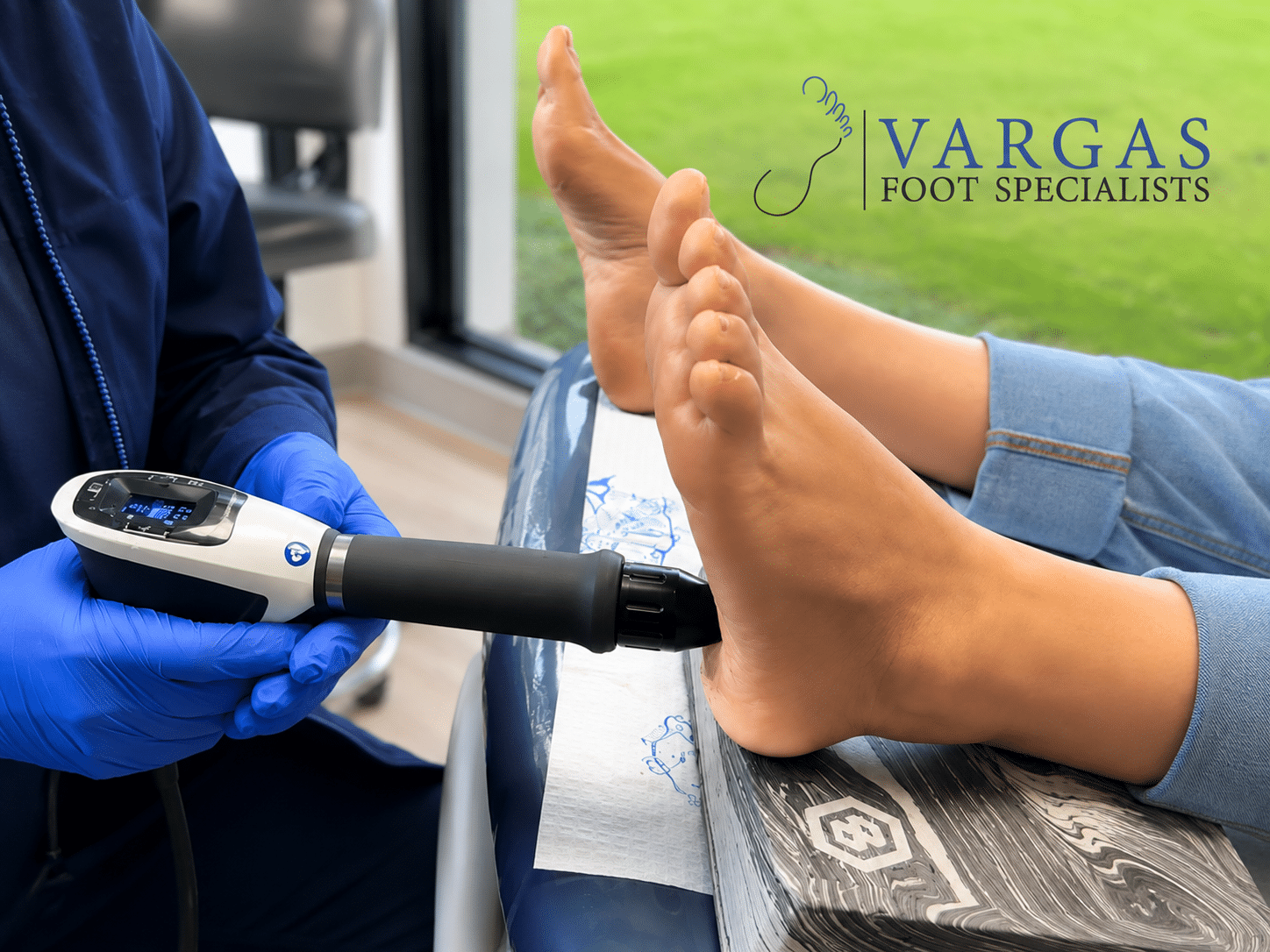
Chronic heel pain can make simple activities such as walking, exercising, and standing at work uncomfortable. If your heel continues to hurt despite rest, supportive footwear, or other initial treatments, you may be wondering whether there are additional options to consider.
One treatment a podiatrist may discuss for certain persistent heel conditions is EPAT® Shockwave Therapy.
Shockwave therapy is a non-invasive treatment that uses acoustic pressure waves directed toward a targeted area. It may help some patients with chronic heel pain, particularly when the discomfort is associated with plantar fasciitis. However, its suitability depends on the diagnosis, and results can vary from person to person.
Plantar fasciitis: This condition affects the thick band of tissue supporting the bottom of the foot. Pain is often most noticeable during the first steps in the morning or after sitting for a long time.
Achilles tendon problems: Pain at the back of the heel may be related to irritation or injury of the Achilles tendon, which connects your calf muscles to your heel bone.
Heel fat pad problems: The natural cushioning beneath your heel can become less effective, leading to discomfort when standing or walking on hard surfaces.
Overuse injuries: Repetitive impact, sudden increases in exercise, and prolonged standing can place excessive stress on the structures of the heel.
Because these conditions may require different approaches, a podiatrist should evaluate your symptoms before recommending shockwave therapy.
EPAT® stands for Extracorporeal Pulse Activation Technology. It is a non-invasive treatment that delivers acoustic pressure waves to a targeted area of the body.
In podiatry, shockwave therapy may be considered for selected patients with chronic plantar fasciitis and certain other musculoskeletal conditions.
The treatment is designed to stimulate a local tissue response and may help reduce pain and improve function in some patients. It does not involve surgery, and treatment is typically performed in an outpatient setting.
However, shockwave therapy is not a guaranteed cure. Its effectiveness depends on the condition being treated, the patient’s individual circumstances, and the overall treatment plan.
For some patients with persistent plantar fasciitis, shockwave therapy may be considered when initial conservative treatments have not provided sufficient relief.
Potential benefits may include:
A non-surgical treatment option for selected chronic heel conditions.
No surgical incision.
A treatment approach that can be combined with other appropriate conservative measures.
The possibility of improving pain and function in suitable patients.
Some patients experience temporary discomfort, tenderness, or redness during or after treatment. Your podiatrist can explain what to expect and determine whether the treatment is appropriate for you.
It is also important to understand that shockwave therapy is not the right choice for every type of heel pain. For example, a suspected fracture or an acute tendon injury requires a different evaluation and management plan.
The process begins with an evaluation of your heel pain. Your podiatrist will review your symptoms, examine your foot, and determine whether further testing is necessary.
If EPAT® Shockwave Therapy is appropriate, the treatment area is identified and the device is applied to deliver acoustic pulses to the targeted tissues.
The number and timing of sessions depend on the treatment protocol and your individual condition. Your podiatrist can explain the expected schedule, potential side effects, and how progress will be evaluated.
You may also be advised to modify certain activities, wear supportive footwear, or perform specific exercises as part of your treatment plan.
There is no single treatment that works best for every patient. The most appropriate option depends on what is causing your heel pain and how long you have been experiencing symptoms.
Depending on the diagnosis, treatment may include:
Activity modification: Adjusting activities that repeatedly aggravate the heel may help reduce excessive stress.
Supportive footwear: Appropriate shoes can help improve comfort and reduce unnecessary pressure on the heel.
Custom orthotics: For selected patients, custom orthotics may help manage foot mechanics and redistribute pressure.
MLS® Laser Therapy: This treatment may be considered for certain foot and ankle conditions based on the clinical evaluation.
EPAT® Shockwave Therapy: Shockwave may be an option for selected patients with chronic plantar fasciitis or other appropriate conditions.
Your podiatrist can discuss the benefits, limitations, and potential risks of each option rather than recommending the same treatment for everyone.
Consider scheduling an evaluation if your heel pain persists, keeps returning, or interferes with walking, working, or exercising.
An examination can help distinguish plantar fasciitis from other conditions and determine whether shockwave therapy or another treatment may be appropriate.
At Vargas Foot Specialists, Dr. Marco A. Vargas, DPM, FACFAS, DABFAS, evaluates foot and ankle conditions and helps patients explore individualized treatment options.
If you are searching for shockwave therapy in Sugar Land, chronic heel pain treatment near you, or a podiatrist in Houston, contact our office to learn more.
Vargas Foot Specialists is located at 4655 Sweetwater Blvd, Suite 650, Sugar Land, TX 77479. Call (281) 313-0090 to schedule an appointment.
Our office welcomes patients from Sugar Land, Houston, Missouri City, Stafford, Richmond, Rosenberg, and Katy, as well as surrounding communities in Fort Bend County and nearby parts of Harris and Brazoria counties.
En Vargas Foot Specialists, nos enorgullece ofrecer atención en inglés y español. El Dr. Marco A. Vargas es bilingüe y nuestro equipo tiene una conexión con la comunidad latina. Queremos que puedas explicar tus síntomas y comprender tus opciones de tratamiento en el idioma que prefieras.
La terapia EPAT® Shockwave puede ser una opción para algunos pacientes con dolor crónico de talón, especialmente cuando está relacionado con la fascitis plantar. Sin embargo, primero es necesario evaluar la causa del dolor para determinar si este tratamiento es adecuado para ti.
Si llevas semanas con dolor de talón o las molestias están afectando tu vida diaria, comunícate con Vargas Foot Specialists en Sugar Land, Texas. Llámanos al (281) 313-0090 para programar una cita.

0 Comments